
Products & Services
Everything from grind to final coat.
We specify, supply and install the whole system — so there's one crew and one warranty behind your floor.
The classic acid stain etched and coloured the slab at once, but it left colour sitting under a thin acrylic or urethane sealer that eventually flakes and needs re-coating. We use the modern equivalent: the floor is machine abraded at roughly 100–200 grit resin, hardened and stained with dyes that are chemically compatible with the densifier, then finish polished, sealed and burnished. The colour is locked into the concrete instead of floating under a low-performance sealer, the colour range is far wider than acid staining, and if you want exposed aggregate we simply grind first.
Vinyl flakes broadcast into a coloured or clear resin base, then locked in with one or two clear top coats. Flake hides slab imperfections, adds texture and gives a seamless, easy-clean surface. Silica can be added to the final coat for extra traction, and we offer 3-D effects, borders and multi-colour designs with concept drawings from our artistic team. Backed by our warranty: 10 years on peeling, delamination or uplift and lifetime on hazing or yellowing from UV.
The step that decides whether a floor lasts. Sanding or washing with TSP only cleans the surface — it leaves bond breakers behind and invites delamination. We diamond grind or shot blast to remove a micro-layer of the slab, creating a profiled, porous substrate so the coating sinks in and expands within the pores. The result is a floor anchored integrally into the concrete rather than glued to the top of it. Also used to prep for glue-down flooring, tile and natural stone mortar beds.
HD graphics embedded in a clear coating that stands up to heavy foot and even vehicular traffic, giving photograph-quality imagery underfoot — temporary graphics are available too. Decorative stains and dyes can be applied in multiple coats for borders, patterns or custom colour throughout, with none of the harsh acid chemistry of the old days. Logos are printed on specialty film and set into the coating, so custom artwork no longer costs hundreds of artisan hours. For something truly one-off, ask about mica-powder metallic epoxy.
An umbrella of finishes for people who want the floor itself to be the feature. Epoxy works as a sealer or as a decorative finish and is recommended anywhere exposed to chemicals and road salts — and it's an easy-clean option for homes with kids and pets. Polyaspartics look similar to epoxy but out-perform it on abrasion resistance and UV stability. Colour flakes (1/16" and 1/4" are the common sizes) broadcast into a clear or pigmented coat give a seamless, textured floor with limitless colour blends.
What separates a professional installation from a DIY kit is preparation, product quality and the number of layers. We start with moisture testing — high-moisture concrete will make any coating peel — then diamond grind, fill cracks and remove oil and chemical staining. Only then do the primer, colour coat, optional flake broadcast, top coat(s) and traction aids go down. It's a proven build for a lifetime of use, and our crews and equipment finish most small and mid-size garages in a single day. We also work with partners for garage cabinetry and storage.
A non-porous, seamless, dust-free and hygienic surface that handles high temperatures. Polyaspartics are roughly 100x more flexible than epoxy in freezing weather, 10x more scratch resistant, and won't yellow. They cure fast — most two-car garages are done in a day and walkable six hours later — and special blends let us install from -20°C to +40°C. Prep is done with a large diamond grinder that levels the slab and opens the pores, cracks, joints and low spots are filled, and HEPA dust collectors keep the site clean. Once cured it integrates with the slab: moisture, crack, chemical and stain resistant.
100% solids two-part epoxy applied in a multi-coat build over a diamond-ground, profiled slab. Epoxy penetrates and expands within the pores of the concrete for a bond mechanical fasteners can't match, then cures to a seamless, non-porous surface that resists chemicals, road salt, oil, abrasion and impact. Available in solid colours, metallic mica pigments, flake or quartz broadcasts, and with coving at wall junctions. Finished with a polyaspartic or urethane top coat for UV stability and gloss control.
The Ottawa garage is the toughest room in the house — salt, sand, freeze-thaw and hot tires. Colour flake gives a hard-wearing, textured finish in endless colour and texture combinations; epoxy and polyaspartic give a clean, sleek look with a touch of colour; polished concrete makes an existing slab shine again. Whatever you choose, preparation decides the outcome, so our team inspects and documents every crack and defect before the crew starts and performs a moisture test where necessary.
Mechanical preparation for any resurfacing system. Grinding and shot blasting strip a micro-layer off the slab to destroy bond breakers and leave a profiled, porous substrate, so the new system anchors into the concrete instead of sitting on it. Washing or degreasing on its own only cleans — it doesn't create profile, and coatings installed over it are the ones that flake off. Our planetary grinders run with dust extraction for a virtually dust-free site.
Heavy planetary floor grinders with a large selection of purpose-built diamond tooling grind away old adhesive, carpet glue and failed coatings, leaving a level, smooth, clean surface behind. Our machines run with dust extractors for a virtually dust-free environment, and no chemicals or toxins are used — chemical strippers are hazardous and often ineffective depending on what was previously on the floor. Once residue is removed, we repair cracks in the slab to stop them from spreading.
Polishable self-levelling overlays (Mapei, TruCrete and similar) let almost any structure — including some wood sub-floors — have a modern polished concrete floor without the weight allowance or height variance a slab needs. Powdered and sprayed stains give a huge range of colour and colour realism. Polymer-modified overlays flex, so they suit surfaces that may move, and they're thinner than a standard porcelain or ceramic tile install. No grout lines even in a grouted look, and they can be tapered to meet adjacent flooring with no ugly step at the doorway.
Driving decks fail where wheels turn on the spot, so shear strength is everything. Our polyaspartic deck systems resist that delamination and hold a far higher gloss, and in most circumstances can be installed in a single day after extensive surface preparation or full-depth repairs. New deck work usually uncovers underlying issues — rotting rebar, failed drains, structural spalling. We handle all of it: digging out and replacing drains, saw-cutting sections of slab, replacing and coating rebar against corrosion, and re-pouring before the new surface goes down.
Every finished floor needs a sacrificial wear layer and a routine — frequency depends on the traffic and the dirt tracked in. Epoxy floors and decorative overlays are maintained with a light, regular application of modern UV-stable acrylic-resin wax that stays clear and glossy far longer than old natural waxes and needs no machine application in a home. Polished concrete and open-poured slabs are maintained with a lithium-based guard burnished into the surface. Done on schedule, maintenance keeps the floor looking new instead of needing restoration.
Before any finish goes down, the slab has to be sound. We route and fill cracks, inject structural cracks, rebuild spalled edges and pitted areas, replace failed control-joint filler with semi-rigid product that protects edges under forklift and vehicle traffic, and patch divots using epoxy paste keyed with grinding dust from your own floor for colour match. Failed or delaminating coatings are ground off and the substrate re-profiled so the replacement system bonds properly.
Line painting can be built into a new floor or added to an existing one — and not just concrete: vinyl commercial tile, linoleum, laminate and more. Aisle markings, safety and hazard lines, stall numbering, walkways, directional arrows, logos and full floor graphics. Our coating systems let us apply just about any graphic to almost any flooring type, with clear top coats over top so the markings wear with the floor rather than off it.
Self-levelling epoxy beats cementitious and gypsum overlayments in two ways. Adhesion: epoxy is far more liquid than concrete when applied, so it penetrates the slab and expands in its pores (over properly ground or shot-blasted concrete), while a concrete overlay bonds only at the surface through a primer. And epoxy is itself a sealer, so the levelling layer and the wear surface can be one and the same. Self-levellers can act as an underlayment or, sealed appropriately, as the finished wear course.
A no-grind polish: instead of cutting into the slab to expose stone, we abrade only the top cream layer, then harden, polish, seal and burnish it. That means no aggregate exposure, a softer uniform look, less dust and less time on site — and it can be dyed to almost any colour, which is how we reproduce the acid-stained look with the colour locked into the floor. Ideal for slabs that are in good shape, or where an exposed-aggregate finish isn't wanted.
Our epoxy-based alternative to mechanical polishing. First we grind the floor to expose the stone and evenly remove the cream coat so the epoxy saturates consistently for even colour and durability. Then we repair the floor — cracks, joints, holes and divots are filled with an epoxy paste made from your own floor's grinding dust so it colour-keys to the finish. Then the floor is coated in 100% solids epoxy (no smelly solvents). We strongly recommend a finishing coat of urethane — available matte, satin or gloss — for UV stability, abrasion resistance and a near-perfect sheen.
Light weight gypsum concrete is designed into modern construction because it lowers building cost and speeds up completion. Most gypcrete cures far faster than conventional concrete's 28 days, so finish flooring can go down within about 48 hours of placing the topping. Installation is fast too — 20,000 sq ft start to finish in one day, with trades walking on it the same day in some cases. It is not a wear surface, though: it must be protected if installed early, it can't be polished, and it can't take epoxy coatings directly.
An architectural finish that turns a standard slab into the feature of the room. Polishing exposes the natural stone aggregate, from 1/8" pebbles to full 1" stones (aggregate size is best specified before the slab is poured — call us and we'll help spec the mix). Stains and dyes add colour, and stencils and artwork add creativity. Floors are finished with a densifier and sealer impregnated with a high-speed burnisher for maximum durability. Healthier than carpet — no mites, dust or dirt to accumulate — and often better priced than tile, hardwood or vinyl.
A skim-thin cementitious or epoxy layer bonded to a prepared slab to erase surface damage, trowel marks and old patches without the cost, weight or height of a new pour. Thinner than a tile install, it can be dyed, polished, sealed or coated afterwards, and feathered to meet adjacent flooring with no transition step.
Overlays stamped or textured while green to mimic slate, flagstone, brick, wood plank or tile, then coloured with integral pigment, release colour and stains. Sealed with a UV-stable top coat, they give the look of natural material over an existing slab — with no grout lines to scrub and a slip-resistant texture underfoot.
Saw-cut and engraved patterns scored into the slab or overlay — grids, tile layouts, borders, medallions and logos — then stained to define the design. Because the pattern is cut into the surface rather than laid on it, it wears with the floor and can be combined with dyes, polish or a clear coating.
Heavy-duty resinous systems for plants, warehouses, shops and food and pharma facilities: high-build epoxy, urethane mortar, chemical-resistant and thermal-shock builds, static-control floors, coving, drain detailing and semi-rigid joint fill. Specified around the traffic, chemistry, temperature and downtime your operation actually has to live with.
Demolition and removal of carpet, tile, VCT, linoleum, hardwood, thinset and failed coatings, followed by grinding off residual adhesive and levelling the slab so the next system has a sound substrate. Done with dust-extracted planetary grinders — no chemical strippers — and cracks repaired before the new floor goes in.
Not sure what your slab needs?
Send us photos and square footage and we'll come back with the systems that make sense — and the ones that don't.
Get a recommendationSee it in place
What each finish actually looks like.
Real floors from Ottawa and Eastern Ontario jobs — pick the look, we'll spec the system that gets you there.
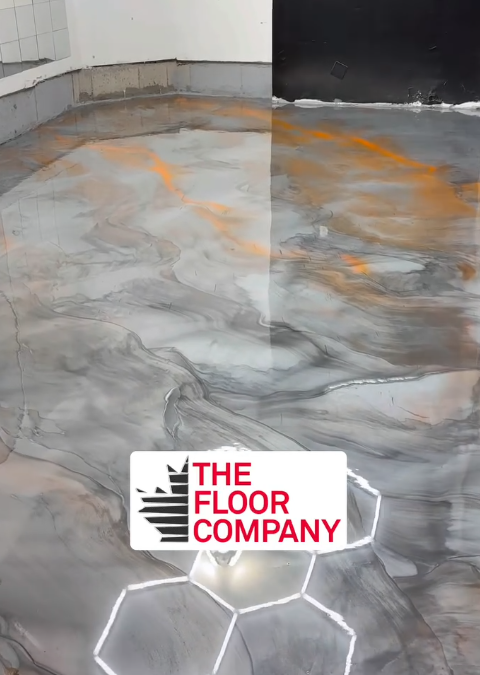
Metallic Epoxy
Mica pigments swirled into 100% solids epoxy for a one-of-a-kind marbled finish.
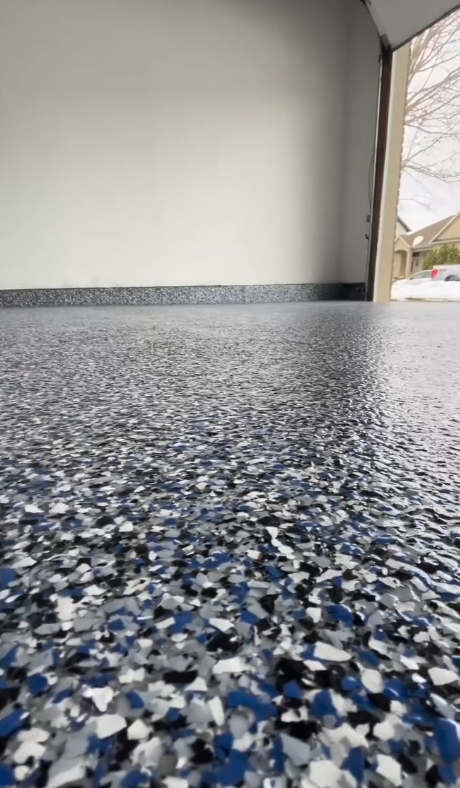
Colour Flake Garage
Vinyl flake broadcast to refusal, sealed with polyaspartic — salt and hot-tire proof.
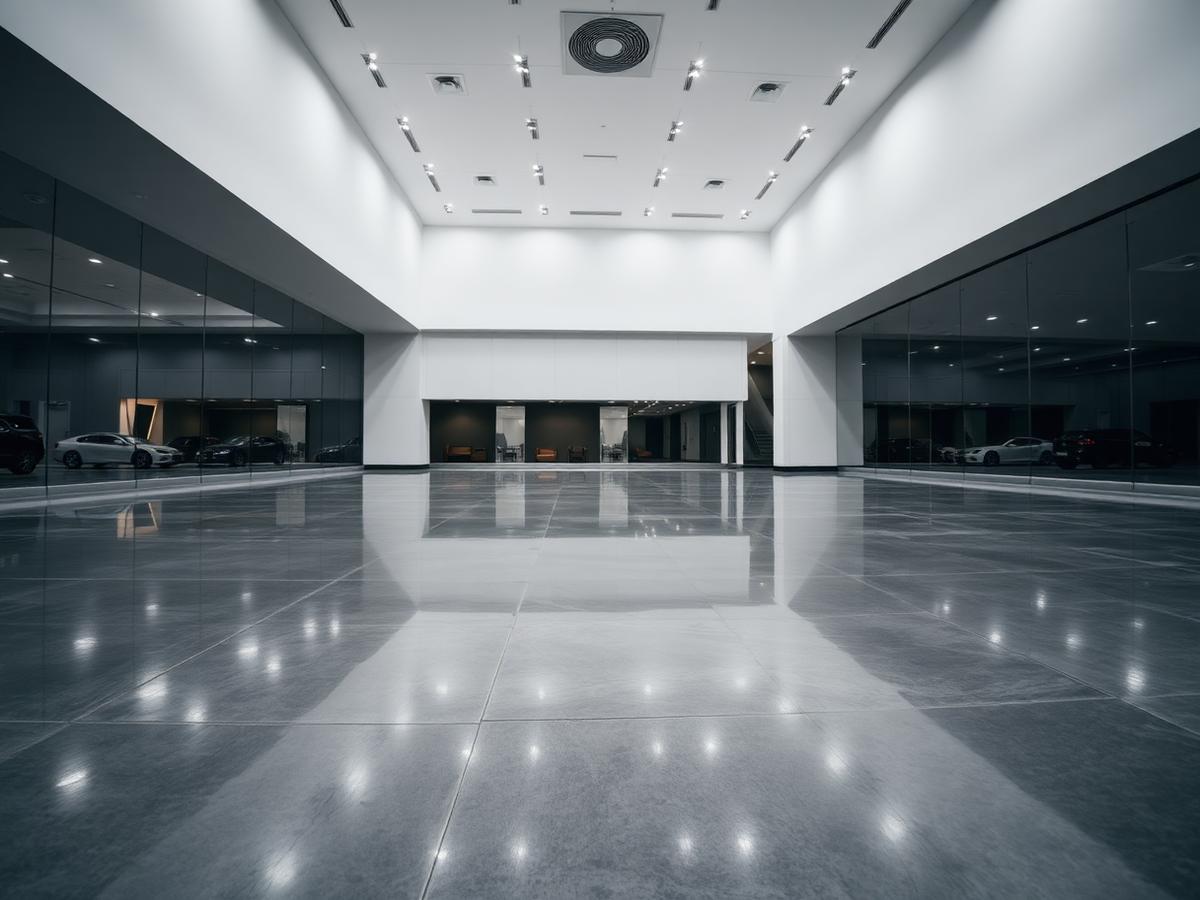
Polished Concrete
Diamond-honed and densified through the grits to a burnished, low-maintenance shine.
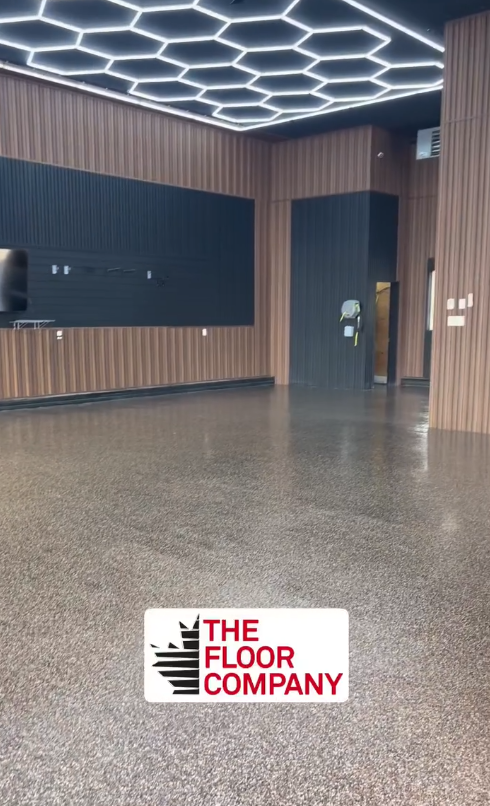
Industrial Coatings
Seamless, hygienic decks built for forklifts, wash-downs and around-the-clock traffic.
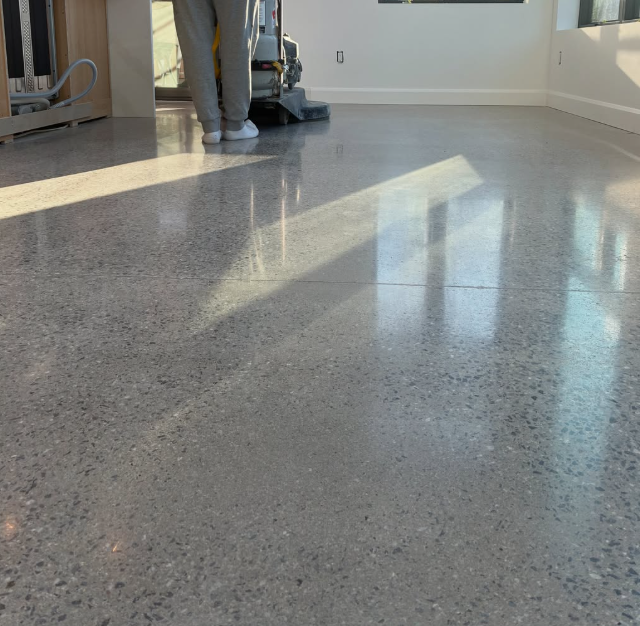
Surface Preparation
Diamond grinding and shot blasting with HEPA collection — the step that makes it last.
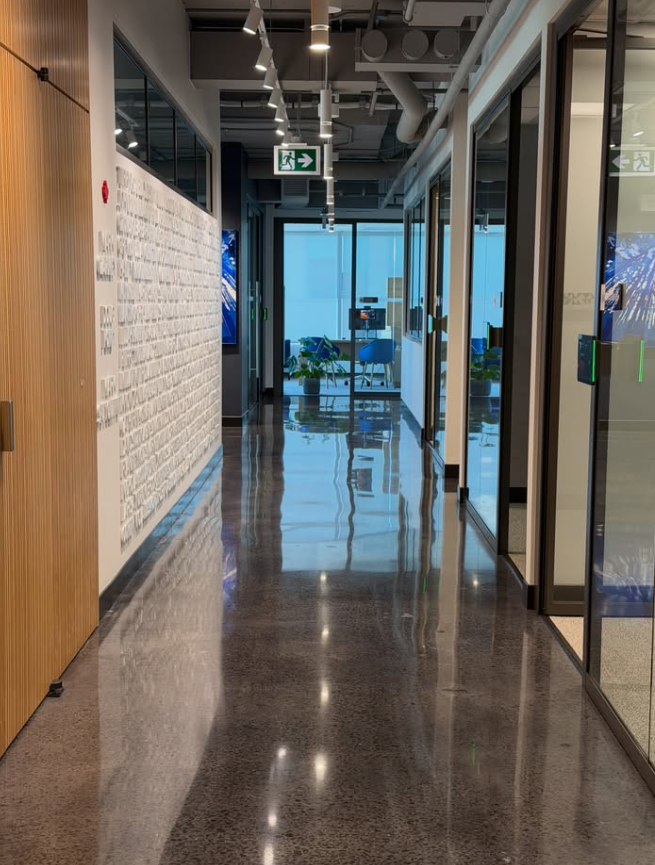
Commercial Polish
Office and retail floors finished to a mirror gloss with almost no downtime.
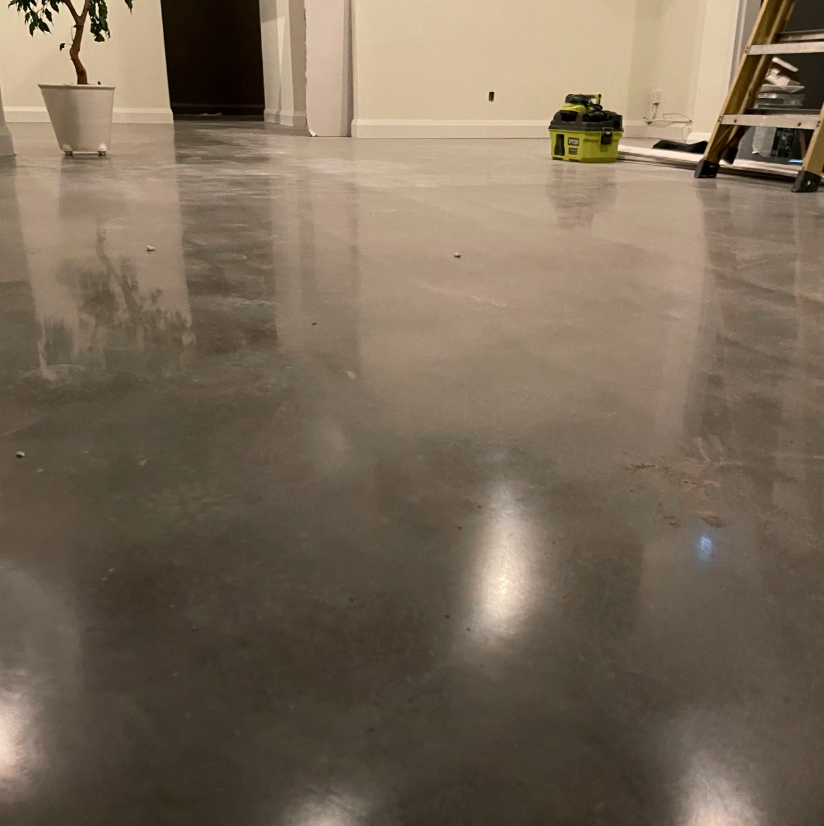
Residential Interiors
Basements, living spaces and kitchens with warm, easy-clean decorative concrete.
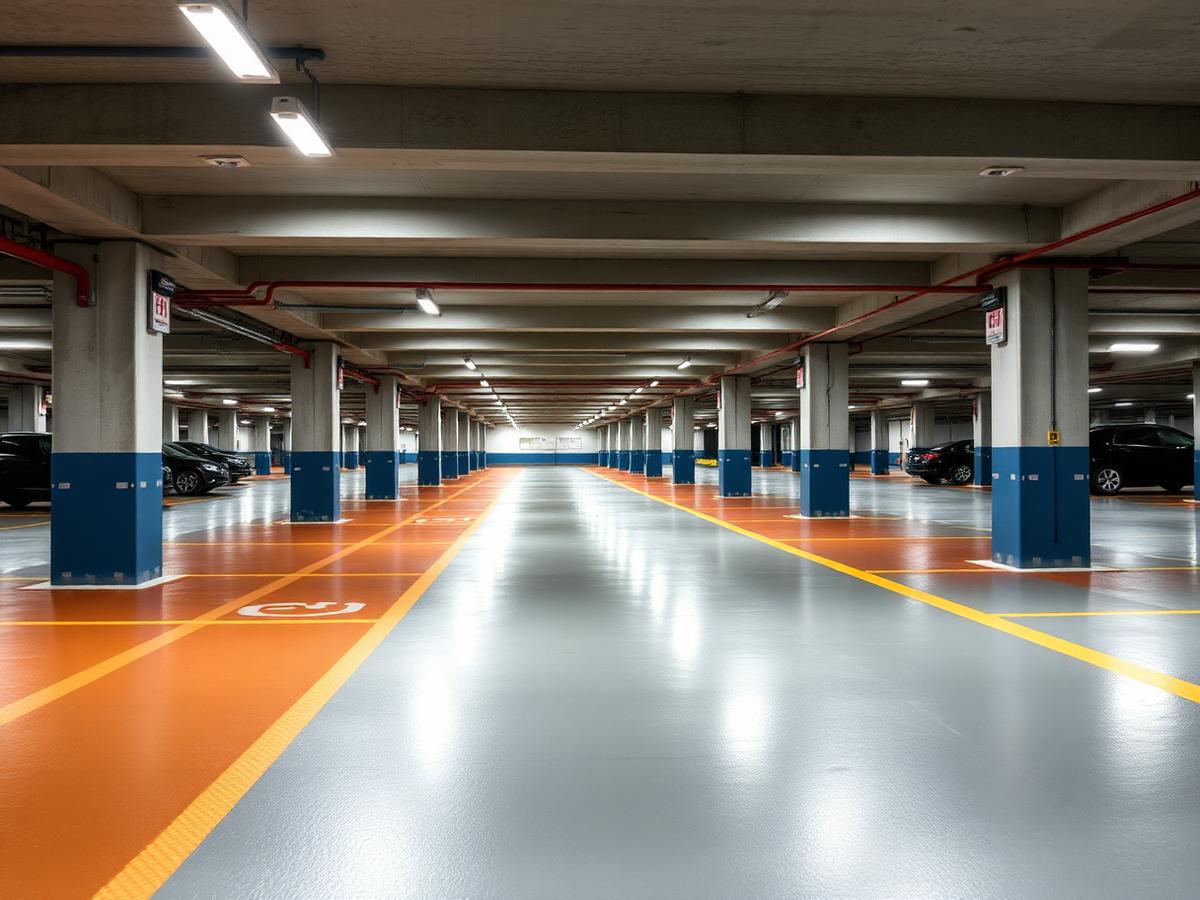
Parking Garage Decks
Traffic-bearing membranes, line painting and waterproofing for structured parking.
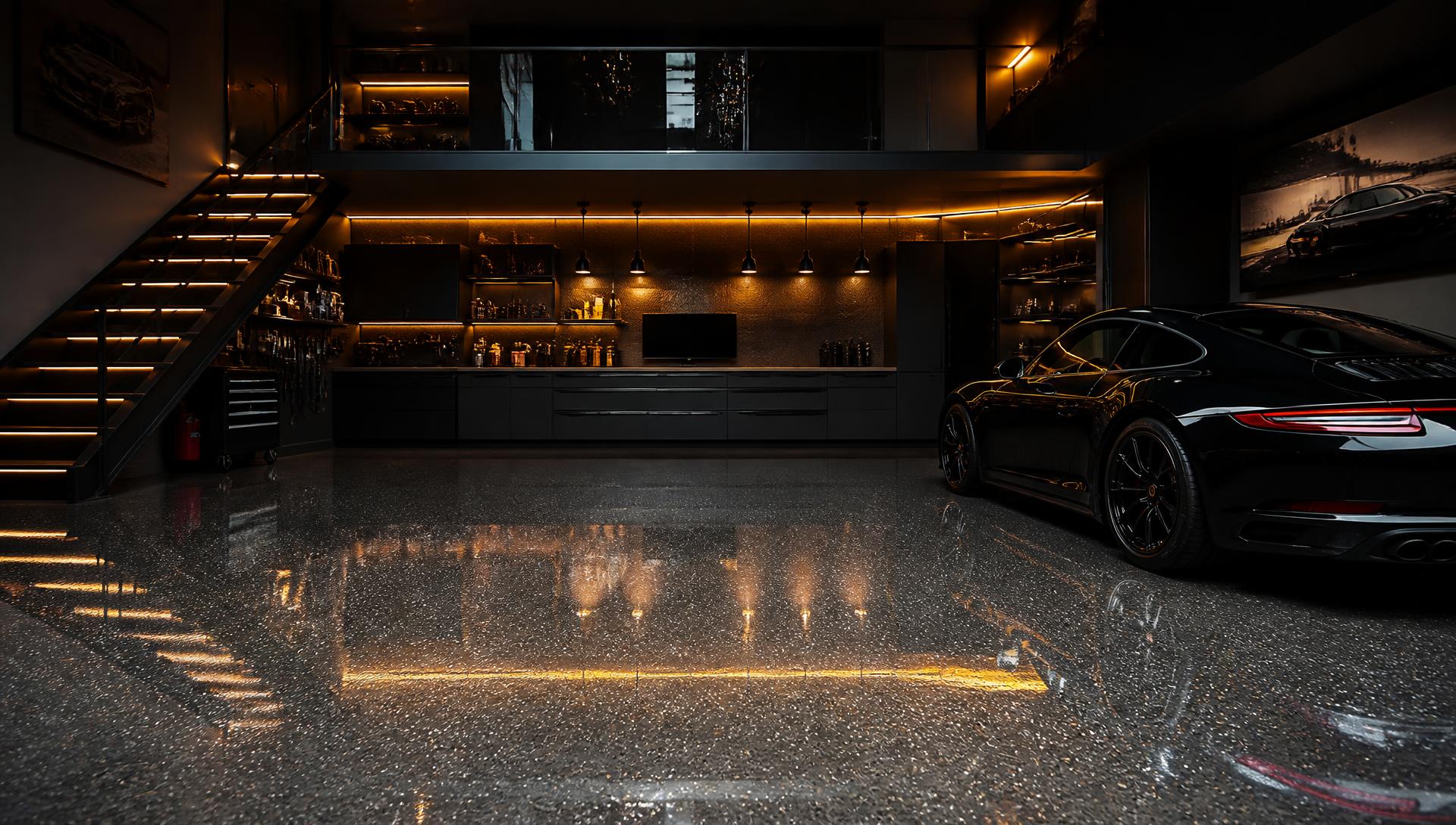
Polyaspartic Systems
One-day installs, walkable in six hours, UV stable and 10x more scratch resistant.
How it works
Six steps from bare slab to a floor you can park on.
Most residential garages are start-to-finish in two days. Commercial work is scheduled around your hours so the doors stay open.
- 01
Free on-site assessment
We measure the slab, test moisture, check for cracks, oil staining and previous coatings, then talk through how the space actually gets used.
- 02
Finish + system selection
You see real colour flake and polish samples. We spec the system — epoxy, polyaspartic, flake, quartz or polished — to the traffic, chemicals and temperature swings it will face.
- 03
Diamond grinding & repair
Dust-shrouded diamond grinding opens the concrete profile, then cracks, spalls and control joints are filled with structural patching compound.
- 04
Basecoat & broadcast
A 100% solids basecoat is rolled and back-rolled, and colour flake or quartz is broadcast to rejection while it is still wet.
- 05
Scrape, vacuum, topcoat
The loose flake is scraped and vacuumed, then one or two clear polyaspartic topcoats lock everything under a UV-stable, non-yellowing surface.
- 06
Walk-through & handover
We walk the floor with you, hand over the care sheet and written warranty. Foot traffic in hours, vehicles in 24–48 hours.
How long it lasts
Built to outlive the vehicles parked on it.
Lifespan comes from preparation, not price. Diamond-ground concrete plus an industrial resin bonds mechanically to the slab — which is why our floors last decades while roll-on kits lift within a season or two.
| System | Expected life | Return to service | Best suited to |
|---|---|---|---|
| Polyaspartic flake garage floor | 20+ years | 24 hours to vehicles | Garages, entryways, showrooms |
| 100% solids epoxy + urethane topcoat | 15–20 years | 48–72 hours | Workshops, basements, mechanical rooms |
| Quartz broadcast system | 20–25 years | 48 hours | Commercial kitchens, wash bays, labs |
| Mechanically polished concrete | 25+ years | Immediate | Warehouses, retail, offices |
| Traffic deck membrane | 12–15 years | 24 hours | Parking garages, ramps, balconies |
2×
Harder than a big-box DIY kit at the same thickness
0
Yellowing — UV-stable polyaspartic topcoats
-30°C
Freeze-thaw and road-salt resistant
48 hr
Typical residential turnaround, start to park
Warranty & guarantee
Put in writing, honoured locally.
Every floor leaves with a written warranty covering both the coating system and the labour that installed it. No fine-print exclusions for hot tires, road salt or winter freeze-thaw — the systems we spec are built for Ottawa conditions, and if a warranted area ever fails we come back and re-coat it at no cost.
15-year residential coating warranty
Written coverage against delamination, peeling and bubbling on residential garage and basement floor systems.
10-year commercial & industrial
Warehouse, showroom and shop floors carry a decade of coverage against adhesion failure under normal service conditions.
Manufacturer-backed products
We install only industrial-grade 100% solids epoxy and polyaspartic resins with their own product warranties behind ours.
Workmanship guaranteed
Prep, patching, coving and topcoats are all done in-house by our crew — one company to call if anything is ever off.
FAQ
Questions, answered.
A properly prepared, professionally installed polyaspartic or epoxy system lasts 20 years or more in a residential garage. Failure almost always comes from prep, not product — which is why we diamond grind every slab rather than acid etch it.
Most residential garages are done in one to two days. You can walk on the floor within a few hours of the final topcoat and park vehicles after 24 to 48 hours, depending on the system and temperature.
Not under our warranty. Mechanical grinding gives the resin a profile to bond into, and our clear topcoats are UV-stable polyaspartics that do not amber the way hardware-store epoxy kits do.
Yes. We grind off old coatings, fill cracks and spalls with structural patching compound and re-profile the slab before anything new goes down. Badly damaged slabs may need a resurfacer first — we tell you at the quote stage.
Sweep or dust mop, and wash with warm water and a pH-neutral cleaner. No waxing, no sealing, no re-coating. Salt, oil and brake fluid wipe straight off.
Pricing depends on square footage, slab condition and the finish you choose. On-site assessments and written quotes are free, and the quote you get is the price you pay.